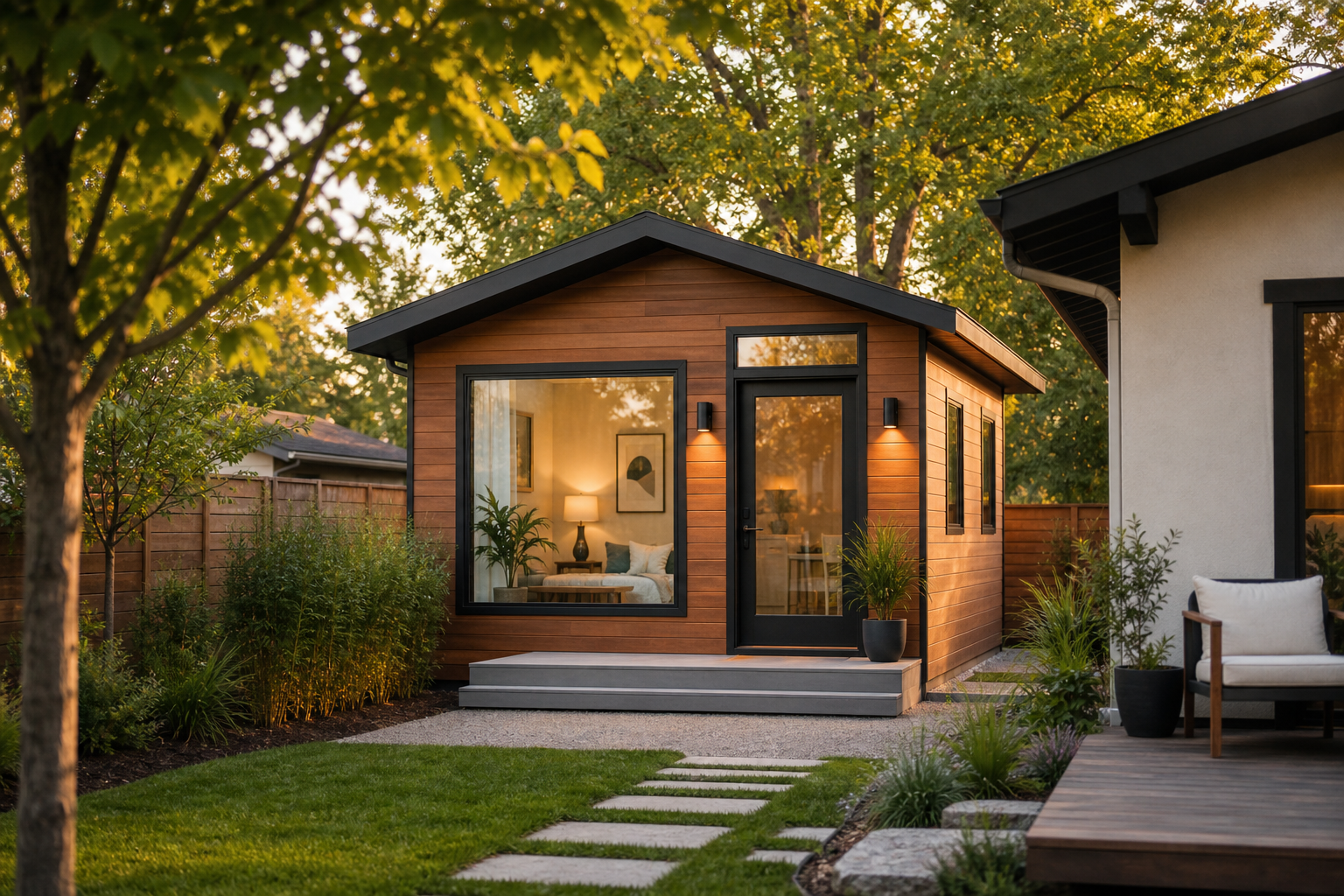
Accessory dwelling units affordable housing strategies have moved from the margins of policy debate to the center of how the United States is trying to fix its supply shortage. An accessory dwelling unit (ADU) is a small, self-contained home built on a lot that already has a primary residence — a backyard cottage, a converted garage, a basement apartment, or a unit above a detached garage. ADUs are modest in size and modest in ambition, but in aggregate they represent one of the fastest, lowest-friction ways to add homes where people already want to live: in existing neighborhoods, near jobs, transit, and schools.
This guide explains what ADUs are, how state-level reform unlocked them, what they cost and how to finance them, why they deliver "gentle density" without disrupting neighborhood character, and how they fit into community and cooperative ownership models. We close with how the new federal supply push — the 21st Century ROAD to Housing Act, passed by Congress in June 2026 (now law as of July 2026) — connects to all of this, and where Built By DAO and our Blueprint platform come in.
What Is an Accessory Dwelling Unit?
An ADU is a secondary, independent living space on the same lot as a primary home. "Independent" is the operative word: a true ADU has its own kitchen, bathroom, sleeping area, and entrance, so it can function as a complete household rather than an extra bedroom. Most jurisdictions recognize several common types:
Detached ADUs
A standalone structure — often called a backyard cottage or granny flat — built separately from the main house. Detached units offer the most privacy and flexibility but typically cost the most because they require their own foundation, walls, and roof.
Attached ADUs
A unit that shares at least one wall with the primary residence, such as an addition off the side or rear of the home. These cost less than detached units because they piggyback on existing structure.
Conversion ADUs
A new dwelling carved out of existing space — a garage conversion, basement apartment, or attic unit. Garage conversions are generally the most affordable path to an ADU because the shell already exists.
Junior ADUs (JADUs)
A smaller unit, usually capped around 500 square feet, created within the walls of an existing single-family home. JADUs often share some facilities with the main house and carry lighter regulatory requirements, making them the lowest-cost option in many places.
Because ADUs reuse land and infrastructure that already exist, they sidestep the most expensive parts of housing development: land acquisition, road building, and utility extension. That is the core reason they matter so much for affordability.
How State ADU Reforms Expanded Them
For decades, local zoning made ADUs nearly impossible to build. Common barriers included outright bans, owner-occupancy requirements, costly parking mandates, long discretionary review processes, and large minimum lot sizes. Even where ADUs were technically legal, the approval gauntlet discouraged most homeowners from trying.
California offers the clearest case study in what changing those rules can do. Beginning in 2016 and expanding through subsequent legislation, the state systematically stripped away local barriers — capping fees, removing parking requirements near transit, mandating ministerial (non-discretionary) approval, and shortening permit timelines. The results were dramatic. According to California YIMBY's reform retrospective, more than 80,000 ADUs were permitted in California after the first reform bill, and by 2022 roughly one in five new housing units produced in the state was an ADU. Los Angeles alone permitted tens of thousands of units, with about one in three homes permitted in a recent year being an ADU.
California is no longer alone. A wave of state-led reform has followed in Washington, Oregon, Vermont, Montana, Arizona, and Colorado, each loosening local restrictions to make ADUs easier to build. Massachusetts' MBTA Communities law (enacted in 2021) pushed in a similar direction by encouraging multifamily and ADU development near transit. National permit data reflects the shift: ADU permitting roughly doubled over six years, with California accounting for the largest share by far.
The lesson from this reform wave is consistent. ADUs are not held back by lack of demand or lack of buildable space — they are held back by rules. When states remove the rules, homeowners build.
What ADUs Cost and How to Finance Them
ADUs are cheaper than building a new single-family home from scratch, but they are not cheap in absolute terms. In high-cost markets like California, total project costs in 2025 generally ran from roughly $150,000 to $350,000, with the full range stretching from about $100,000 for simple conversions to $400,000-plus for large detached units. Construction commonly fell between $200 and $450 per square foot, with dense urban areas at the high end.
Several factors drive the spread:
- Type. Detached units cost the most; garage and basement conversions cost the least.
- Location. Labor and material costs vary widely by region.
- Utilities. New or upgraded water, sewer, gas, and electrical connections can add $10,000 to $35,000.
- Soft costs. Design, permitting, and engineering typically run 10 to 20 percent of the budget.
Financing is often the real bottleneck, because most homeowners do not have six figures of cash on hand. Common approaches include:
- Home equity loans and HELOCs, which tap accumulated equity in the primary home — the most widely used route for owners with substantial equity.
- Cash-out refinancing, replacing an existing mortgage with a larger one and taking the difference as cash, attractive mainly when prevailing rates are favorable.
- Renovation loans such as FHA 203(k) and Fannie Mae HomeStyle, which fold construction costs into the mortgage and can underwrite based on projected post-construction value.
- Construction loans that convert to permanent financing once the unit is complete.
- State and local ADU grant or forgivable-loan programs, which have emerged to help moderate-income homeowners cover predevelopment and construction costs.
The financing question is precisely where many ADU projects stall — and precisely where structured planning and financial modeling can move a project from idea to permit.
Gentle Density: More Homes Without Disruption
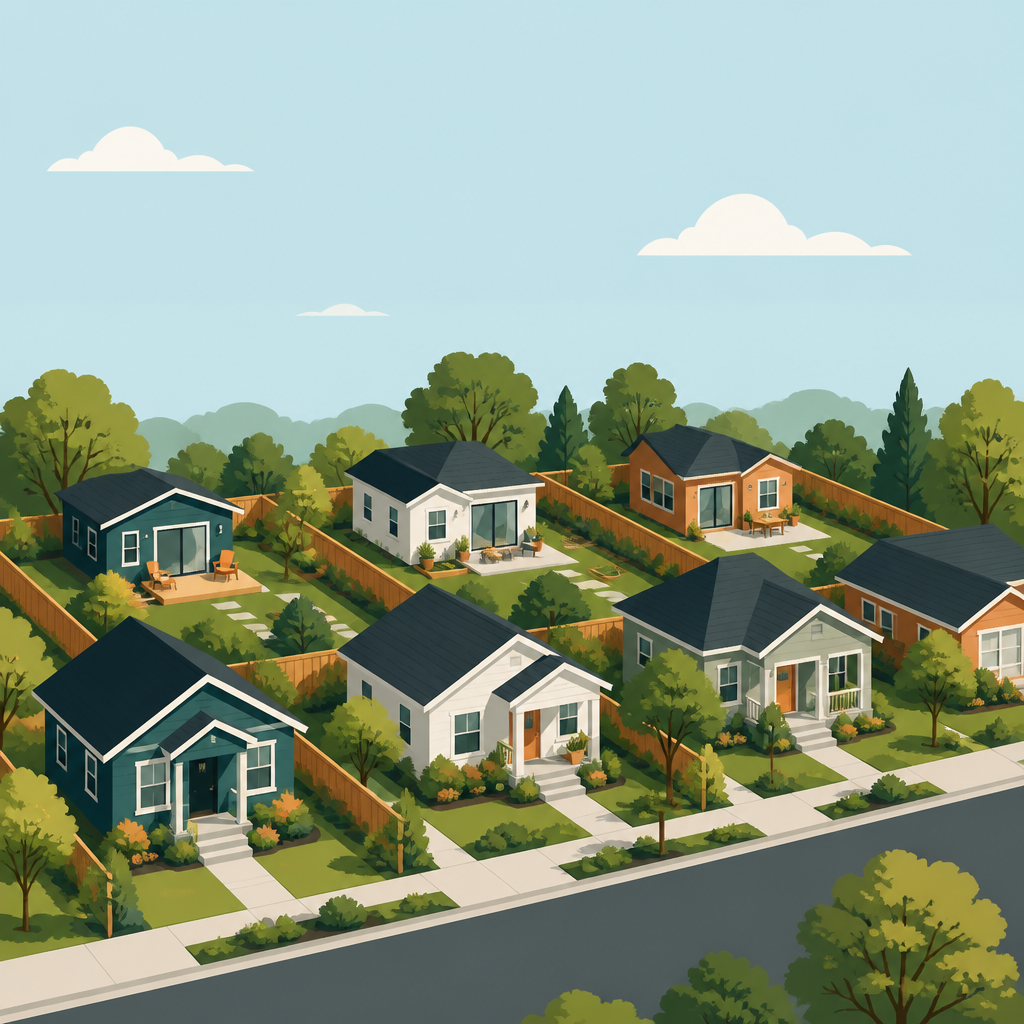
"Gentle density" describes adding housing incrementally within existing neighborhoods rather than through large-scale redevelopment. ADUs are the archetype. Because they fit on lots that already hold a home, they increase the number of households a block can support without changing its fundamental scale or character. A street of single-family homes can quietly absorb dozens of new units without a single new apartment tower.
This matters for affordability in several ways. ADUs are usually smaller than primary homes, so they rent or sell for less. They distribute new housing across many lots rather than concentrating it, which tends to face less neighborhood opposition. And they let existing homeowners — including seniors aging in place and multigenerational families — stay in their communities while creating new homes for renters and first-time occupants. Gentle density also makes better use of public infrastructure already paid for: streets, sewers, transit lines, and schools serve more people at lower marginal cost.
ADUs, Community Ownership, and Cooperatives
Most ADU discussion assumes a single homeowner adding a single unit. But ADUs also fit naturally into community and cooperative ownership — and that is where the affordability case gets stronger and more durable.
In a housing cooperative, residents collectively own and govern their housing through shares in a cooperative entity rather than owning individual units outright. Cooperatives can hold land and structures in common, set resale and rent policies that keep homes permanently affordable, and pool resources for maintenance and improvements. When ADUs are added within a cooperative or community land trust framework, the new units inherit those affordability protections instead of being exposed to speculative resale.
This combination addresses two weaknesses of the standard ADU model. First, individually owned ADUs can be rented at market rates, so affordability is never guaranteed. Within a cooperative, the community can commit units to long-term affordability by design. Second, the financing barrier that stops individual homeowners can be tackled collectively: a cooperative can underwrite, finance, and manage ADU additions across many properties at once, spreading risk and cost. Community ownership turns ADUs from scattered, market-rate add-ons into a coordinated tool for permanently affordable supply.
The Federal Supply Push and Where ADUs Fit
In June 2026, the 21st Century ROAD to Housing Act (H.R. 6644) was passed by Congress. The legislation pairs regulatory streamlining intended to boost housing supply with provisions — associated with Representative Velázquez — that authorize cooperatives within federal housing programs. Supporters note that cooperatives already support roughly 1.5 million families nationwide, and the new authorities are designed to make co-op models easier to use alongside federal resources.
ADUs sit squarely in the supply-expansion logic of this federal push. Regulatory streamlining at the federal level complements the state ADU reforms already underway, reducing friction across the system. And the explicit authorization of cooperatives in federal programs strengthens exactly the ownership model that makes ADUs durably affordable. Read together, the trend is clear: reduce the rules that block small-scale housing, and expand the ownership structures that keep it affordable. ADUs and cooperatives are two halves of the same strategy.
How Built By DAO + Blueprint Fit In
Built By DAO is a venture studio for community-owned development, working across Urban Array, Running Start Digital, and our flagship platform, Blueprint. Founded by Marquis Davis, the studio exists to make community ownership practical rather than theoretical.
ADUs and cooperatives both fail at the same point: planning and financing. A homeowner can want an ADU and still never break ground because the path from concept to financed, permitted project is opaque. A community can want a cooperative and stall on the modeling, governance, and capital structure. Blueprint (blueprint.builtbydao.com) is software built to close that gap — it helps communities plan, finance, and launch affordable housing cooperatives, turning the kind of supply and ownership strategy described above into a concrete, executable plan. As federal and state reforms open the door to more small-scale, community-owned housing, Blueprint is the tool for actually walking through it.
Ready to turn ADUs and cooperative ownership into a real project? Explore Blueprint at blueprint.builtbydao.com.
Frequently Asked Questions
Are ADUs actually affordable to build?
ADUs are far cheaper than a new standalone home because they reuse existing land and infrastructure, but they are not inexpensive. In high-cost markets, projects commonly ran from about $100,000 for simple conversions to $350,000 or more for large detached units in 2025. The biggest swing factors are unit type, location, and utility upgrades.
What is the difference between an ADU and a junior ADU?
A standard ADU is a fully independent dwelling with its own kitchen, bathroom, and entrance, and can be detached, attached, or a conversion. A junior ADU (JADU) is a smaller unit — usually capped around 500 square feet — created inside the existing walls of a single-family home, often sharing some facilities. JADUs typically face lighter regulations and cost less.
Why did ADU construction increase so much recently?
State-level reform removed the local barriers that had made ADUs nearly impossible to build — bans, parking mandates, owner-occupancy rules, and long discretionary reviews. After California began reforming its rules in 2016, ADU permitting rose sharply, and similar reforms have since spread to states including Washington, Oregon, Vermont, Montana, Arizona, and Colorado.
How do ADUs support affordable housing?
ADUs add smaller, lower-cost homes within existing neighborhoods ("gentle density") without large-scale redevelopment. They make better use of infrastructure already in place and let homeowners create new rental housing. When combined with cooperative or community land trust ownership, ADUs can be committed to long-term affordability rather than rented at market rates.
How does the 21st Century ROAD to Housing Act affect ADUs?
The Act, passed by Congress in June 2026, pairs regulatory streamlining to boost housing supply with provisions authorizing cooperatives in federal housing programs. While not exclusively about ADUs, its supply-expansion approach complements state ADU reforms, and its cooperative authorities strengthen the ownership model that makes ADUs durably affordable.
Can a cooperative add ADUs to its properties?
Yes. A housing cooperative can plan, finance, and manage ADU additions across multiple properties collectively, spreading cost and risk and committing the new units to long-term affordability. This is one of the use cases Built By DAO's Blueprint platform is designed to support.