Modular affordable housing has moved from a niche experiment to a serious tool for delivering homes faster and, in the right conditions, for less money. For housing cooperatives—where residents collectively own and govern their buildings—the appeal is direct: lower hard costs and shorter schedules can mean lower monthly carrying costs for the families who live there. But the savings are real only when the project is structured correctly. Factory-built housing carries its own financing, transportation, and lender-comfort challenges that can erase the gains if you ignore them.
This guide explains how modular and prefabricated construction actually works, where the cost and time savings come from, where they break down, and how cooperative developments in particular can put these methods to use.
What modular and prefab construction actually mean
"Prefabrication" is an umbrella term for any building component manufactured off-site and assembled on-site. Under that umbrella sit several distinct approaches, and the differences matter for cost and risk.
Volumetric (modular) construction
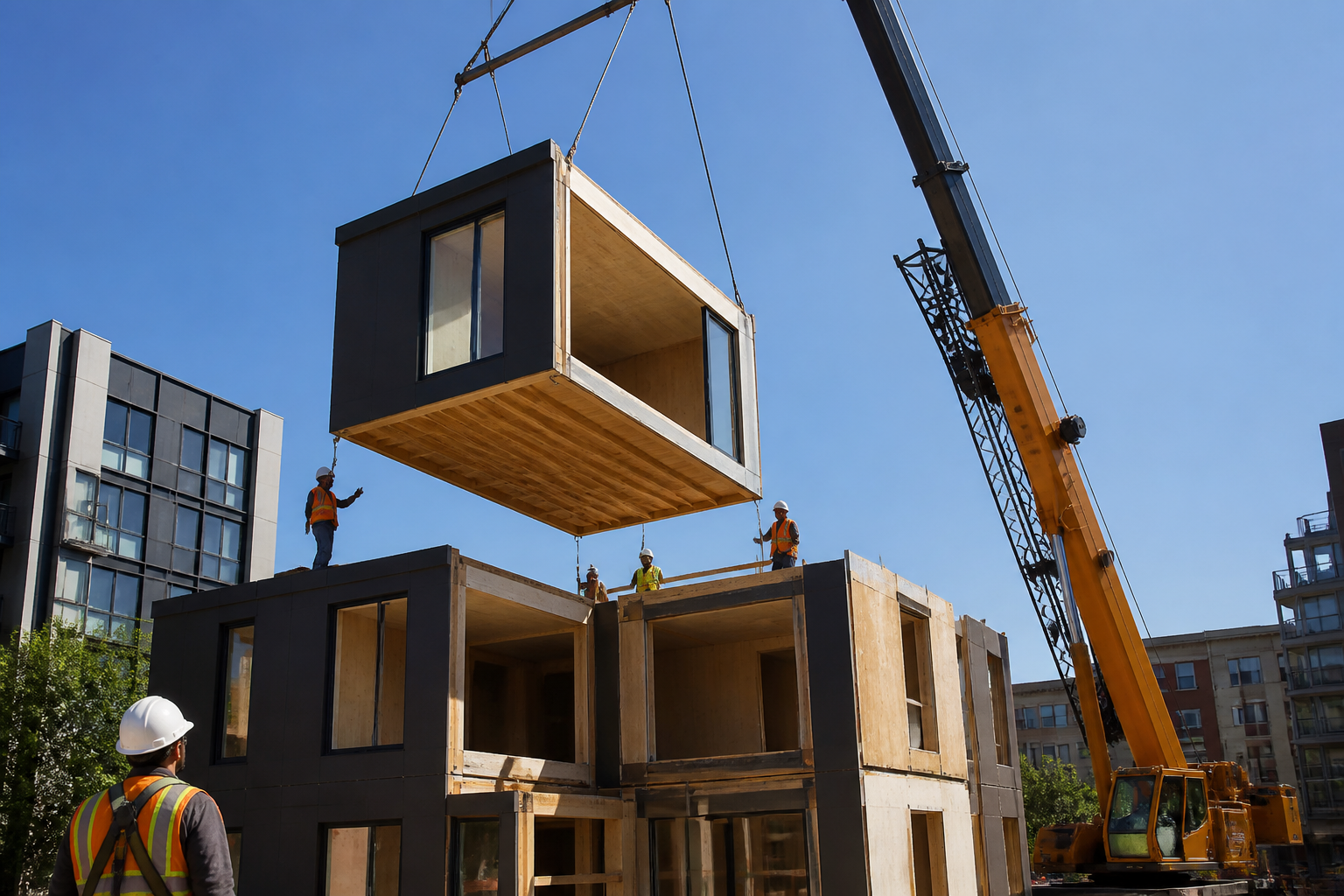
Volumetric modular is what most people picture: three-dimensional "boxes"—complete room-sized modules with floors, walls, ceilings, wiring, plumbing, and often finishes—built in a factory and trucked to the site, where a crane stacks and connects them. A multifamily building can be 60 to 90 percent complete before a module ever reaches the site. This is the approach with the largest potential schedule savings because foundation and site work happen at the same time the modules are being built indoors.
Panelized construction
Panelized systems ship flat wall, floor, and roof panels that are assembled on-site into a frame. There's less factory completion than volumetric modular, but panels are cheaper to transport (they pack flat) and are more forgiving of irregular sites and unusual designs. Panelization is often the pragmatic middle ground for infill cooperative projects on tight urban lots.
Components and sub-assemblies
The lightest form of prefab includes manufactured trusses, pre-hung door and window assemblies, and prefabricated bathroom "pods" or mechanical racks. Many conventional affordable projects already use these without calling the project "modular." They lower labor demand at specific bottlenecks without committing the whole building to a factory process.
Where the cost and time savings come from
The case for modular affordable housing rests on a few structural advantages over site-built construction.
Parallel scheduling. Because factory production runs at the same time as site and foundation work, total project duration can shrink meaningfully—often by several months on a mid-size multifamily building. For a co-op carrying a construction loan, every month saved is interest not paid and rent or carrying charges collected sooner.
Controlled factory environment. Indoor production removes weather delays, reduces material waste, and allows assembly-line efficiencies and tighter quality control than a job site exposed to rain, heat, and cold. Workers operate at bench height with jigs and repeatable processes rather than on ladders and scaffolds.
Labor leverage. In high-cost markets with skilled-trade shortages, shifting hours into a factory—where the workforce can be trained on repeatable tasks—can reduce the on-site labor crunch that drives up budgets and timelines.
Standardization and repetition. Cooperatives and other affordable developments frequently build many similar units. Repetition is exactly what factories reward. The more units share a layout, the lower the per-unit cost.
It's worth being precise about the size of the savings, because this is where hype creeps in. Modular does not reliably deliver dramatic per-square-foot hard-cost reductions on every project. Independent reviews of modular multifamily work have found that schedule savings are the most consistent benefit, while hard-cost savings are real but more variable—sometimes modest, occasionally absent—depending on factory location, transport distance, design complexity, and how much of the building is actually modularized. Treat "modular is always cheaper" as a claim to test against your own pro forma, not a given.
The real caveats nobody should skip
Modular construction reorganizes a project's risks; it doesn't eliminate them. Four caveats deserve genuine attention.
Factory financing and cash flow
Conventional construction draws release money as work is completed on a site the lender can inspect. Modular flips the timing: a large share of the building's value is created inside a factory, often in another state, and the manufacturer typically wants substantial deposits and progress payments before modules ship. That creates a financing gap. The collateral—your modules—is sitting on a factory floor the lender doesn't control. Projects solve this with manufacturer payment-and-performance bonds, security interests in the work-in-progress, factory inspections, and lenders experienced with off-site construction. Skipping this structuring is the single most common way modular deals stall.
Transportation and logistics
Modules are big, heavy, and constrained by highway and bridge clearances. Transport cost rises with distance, so a factory 600 miles away can quietly erase the savings a closer one would deliver. Oversize-load permits, route surveys, crane access, and tight urban staging all add cost and coordination. The economics favor sites within a reasonable haul radius of a capable factory.
Lender and appraiser comfort
Many lenders, appraisers, and even local building officials have less experience with factory-built multifamily than with stick-built. That can mean slower underwriting, conservative valuations, and extra documentation. The picture is improving as more projects deliver successfully, but a co-op should expect to spend time educating its capital partners and should choose lenders who have done modular before.
Design lock-in and the factory pipeline
Modular rewards early, frozen decisions. Once production starts, changes are expensive or impossible—you can't move a wall in a module that's already built. This demands more complete design earlier than site-built projects require. And factory capacity is a real constraint: a manufacturer's order book, or its financial health, can delay or derail a project. Vetting the factory's balance sheet and backlog is part of due diligence, not an afterthought.
Quality: better than the stereotype
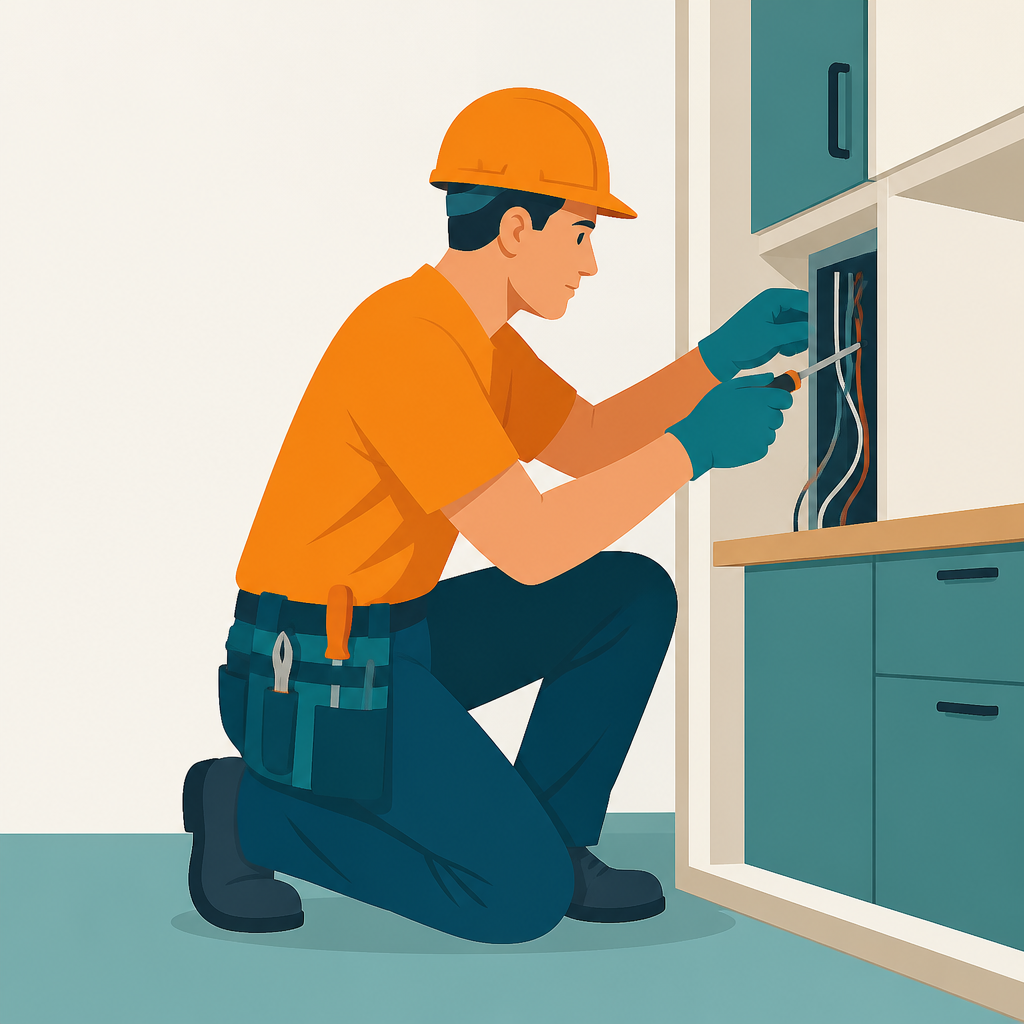
The persistent stereotype—that factory-built means flimsy—gets the engineering backward. Modules must survive being craned and trucked down a highway, so they are typically engineered to be stronger than the equivalent site-built structure, with more fasteners and rigid connections. Indoor construction keeps materials dry and protected, reducing the moisture and mold risks that plague weather-exposed framing.
Crucially, modular multifamily buildings are built to the same state and local building codes as site-built ones, plus factory inspection programs that provide third-party oversight of work that's later sealed inside finished walls. The result, done well, is consistent quality that's easier to verify than work buried on a chaotic job site.
None of this means quality is automatic. It depends on the manufacturer's track record, the rigor of the inspection regime, and careful detailing at the seams where modules meet—acoustic, fire, and weatherproofing performance all live at those connections. Choose the factory carefully and design the joints deliberately.
How modular lowers costs for cooperative developments specifically
Cooperatives have a few characteristics that make them an unusually good fit for prefab.
First, co-ops optimize for long-term affordability, not resale flipping. Lower hard costs and faster delivery flow straight through to lower monthly carrying charges for member-owners, which is the entire point of a limited-equity or shared-equity co-op. The savings benefit residents rather than an outside developer's margin.
Second, co-ops build repeatable unit types. A co-op delivering dozens of similar units is exactly the standardized, high-repetition order a factory prices best.
Third, speed reduces carrying costs during development, when a co-op is often paying for a construction loan, predevelopment expenses, and an empty building. Shortening that window protects the project's fragile early-stage budget.
Federal policy is now catching up to this opportunity. The 21st Century ROAD to Housing Act (H.R.6644), passed by Congress in June 2026 (now law as of July 2026), pairs housing-supply and permitting-streamlining provisions with the Velázquez provisions that explicitly authorize cooperatives within federal housing programs—support estimated to reach roughly 1.5 million families. Streamlined approvals and clearer federal recognition of the co-op model make it easier to combine cooperative ownership with modular delivery, because both depend on predictable timelines and standardized, replicable project structures.
How Built By DAO + Blueprint fit in
Built By DAO is a venture studio for community-owned development, building the tools and structures that let communities own what they build. Our flagship software, Blueprint, helps groups plan, finance, and launch affordable housing cooperatives—the exact stage where modular decisions either pay off or fall apart.
Blueprint is where you model the tradeoffs honestly: run a modular-versus-site-built pro forma, stress-test factory deposit schedules against your construction financing, account for transport distance, and structure the co-op so the savings reach member-owners as lower carrying charges. Because modular rewards early, complete decisions and disciplined capital planning, having a structured platform to plan financing and governance up front is exactly what keeps a factory-built co-op project on track.
If you're a community group, sponsor, or organizer exploring whether prefab construction can make your cooperative pencil out, start with the planning.
Plan your cooperative with Blueprint →
Frequently asked questions
Is modular construction always cheaper than building on-site?
No. The most consistent benefit is schedule—projects finish faster. Hard-cost savings are real but variable, depending on transport distance, design complexity, factory location, and how much of the building is modularized. Always test the savings against your own budget rather than assuming them.
Does factory-built housing meet building codes?
Yes. Modular multifamily buildings are built to the same state and local building codes as site-built construction, with added factory inspection programs that provide third-party oversight of work later sealed inside the walls.
Why is financing harder for modular projects?
Because much of the building's value is created in a factory before anything reaches the site, and manufacturers usually require large deposits up front. That creates a gap between when money is owed and when a lender can inspect collateral on-site. Experienced lenders, bonding, and security interests in the factory work address it.
What's the difference between modular and panelized construction?
Modular (volumetric) ships complete three-dimensional room modules that are stacked on-site. Panelized ships flat wall, floor, and roof panels assembled into a frame on-site. Modular completes more in the factory; panelized transports more cheaply and adapts more easily to tight or irregular sites.
Why is modular a good fit for housing cooperatives?
Co-ops build repeatable unit types (which factories price well), optimize for long-term affordability rather than resale, and are sensitive to carrying costs during development. Faster delivery and lower hard costs flow directly to member-owners as lower monthly charges.
How far can modules be transported economically?
There's no fixed limit, but transport cost rises with distance and oversize-load permitting. A factory within a reasonable haul radius of the site usually preserves the economics; a distant factory can erase the savings. Sites near a capable manufacturer have the strongest case.