
Shared equity homeownership is the broad family of programs that let households buy a home at a price below the open market, build a modest amount of wealth while they own it, and then resell at a price that stays affordable for the next family. It sits in the gap between renting, where you build no equity at all, and conventional market-rate ownership, where prices can rise out of reach of the people a community is trying to keep. The trade is straightforward: buyers accept a cap on how much their home can appreciate in exchange for getting into ownership in the first place, and the public or philanthropic subsidy that made that possible stays locked into the home instead of cashing out with the first owner.
If you have heard the terms limited-equity co-op, community land trust, or deed-restricted home and wondered how they relate, the short answer is that they are three different legal mechanisms for doing the same thing. This guide explains the umbrella category, walks through each model, compares them side by side, and is honest about the tradeoffs.
What "shared equity" actually means
In a conventional purchase, the buyer captures all of a home's appreciation. If you buy at $250,000 and sell at $400,000, the $150,000 gain is yours. That is wealth-building at its best, but it is also why subsidized homes resold at market rates stop being affordable almost immediately: the first buyer pockets the public subsidy, and the next family faces the full market price.
Shared equity breaks that cycle by separating two things that ordinary ownership bundles together: the right to live in and control a home, and the right to capture its full speculative upside. Shared-equity owners keep the first in full. They hold title or a long-term proprietary interest, they can decorate, renovate within program rules, pass the home to heirs in many programs, and they cannot be evicted as long as they meet their obligations. What they give up is a portion of the appreciation, which is governed by a resale formula written into the deed, lease, or co-op bylaws.
The resale formula is the heart of it
Every shared-equity program runs on a resale formula that determines what an owner can sell for. The most common types are:
- Fixed-rate (appraisal-based) formulas grant the owner a set percentage of the change in the home's appraised value, often 25 percent.
- Index-based formulas tie the resale price to changes in area median income (AMI), so the home stays affordable to the same income band over time.
- Itemized formulas start with the purchase price and add credits for approved improvements and inflation, minus deductions for damage.
The formula is the policy lever. Tighten it and homes stay affordable longer but owners build less wealth; loosen it and owners gain more but affordability erodes faster. There is no objectively correct setting, only a choice a community makes about whose interest to weight.
Who shared equity serves
Shared-equity homeownership is built for the households that the market leaves behind but who are not the lowest-income renters that deep-subsidy programs target. In practice that usually means buyers earning between roughly 50 and 120 percent of area median income — teachers, nurses, transit workers, tradespeople, and service staff who earn too much for most rental assistance and too little to buy at market rates in the places they work.
It serves them well for a few reasons. Down payments and monthly costs are lower because the purchase price is below market. Many programs include stewardship support — pre-purchase counseling, financial coaching, and help avoiding foreclosure — that conventional buyers do not get. And research on shared-equity programs over the past two decades has generally found low foreclosure rates and high rates of owners moving on to market-rate ownership, suggesting the model works as a genuine on-ramp rather than a permanent ceiling.
The three models, explained
Limited-equity housing cooperatives
In a housing cooperative, residents do not own their individual units. They own shares in a corporation that owns the entire building or development, and the share gives them a proprietary lease to occupy a specific unit. A limited-equity cooperative (LEC) adds a cap: the bylaws restrict how much the resale price of a share can rise, keeping the cost of buying in affordable across generations of members.
Co-ops are governed democratically — one member, one vote — so residents collectively control budgets, maintenance, admissions, and house rules. That shared governance is the model's defining strength and its defining demand: it builds real community control and keeps costs down, but it asks members to participate. Financing has historically been the hard part, because lenders are less familiar with share loans and blanket mortgages than with single-family deeds. This is precisely the friction the policy and software landscape is now working to remove.
Community land trusts (CLTs)
A community land trust splits the home from the land beneath it. A nonprofit trust owns the land permanently and leases it to the homeowner through a long-term ground lease, typically 99 years and renewable. The homeowner owns the building outright and holds a normal deed to it, but the ground lease carries a resale formula that limits the price the home can be sold for.
Because the trust holds the land in perpetuity, the subsidy is locked in essentially forever — a CLT home subsidized once can stay affordable through dozens of resales. CLTs also provide ongoing stewardship, stepping in to help owners through hardship and approving resales. The tradeoff is that buyers own a house on leased land, which can feel unfamiliar and occasionally complicates financing or refinancing, and the resale cap means slower wealth-building than market ownership.
Deed-restricted (inclusionary) homeownership
A deed-restricted home is the simplest mechanism: the affordability requirements are written directly into a covenant recorded against the property's deed. The owner holds normal fee-simple title to both the home and the land, but the covenant limits resale price, caps buyer income eligibility, and often requires the home to be a primary residence. These restrictions frequently come out of inclusionary zoning, where developers must set aside a share of units as affordable in exchange for permits or density.
Deed restrictions are the easiest model for buyers to understand because the ownership looks conventional, and they slot neatly into market-rate developments. The weakness is durability. Restrictions can expire after a set term, are only as strong as the entity monitoring them, and without active stewardship homes can quietly slip back to market rate when a covenant lapses or is violated.
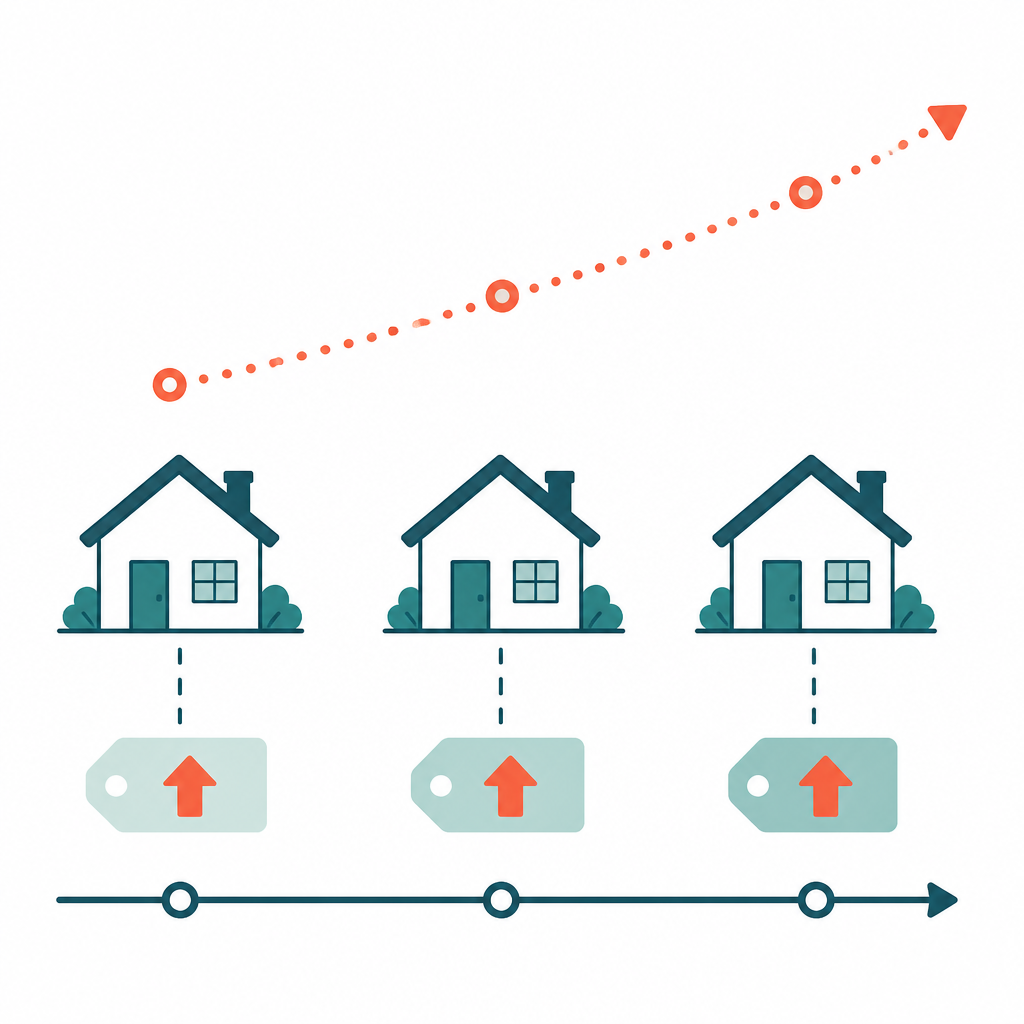
Comparison: the three shared-equity models
| Feature | Limited-Equity Co-op | Community Land Trust | Deed-Restricted Home |
|---|---|---|---|
| What the owner holds | Shares + proprietary lease | Deed to home, ground lease on land | Fee-simple deed to home and land |
| Who owns the land | The cooperative corporation | The nonprofit land trust | The homeowner |
| Governance | Democratic, member-controlled | Trust board, often resident seats | None inherent; monitored by an agency |
| How affordability is enforced | Cap in corporate bylaws | Ground lease resale formula | Deed covenant resale formula |
| Durability of subsidy | Long, tied to corporate rules | Strongest — perpetual via land ownership | Weakest — can expire or lapse |
| Ongoing stewardship | Members collectively | Trust provides it actively | Often minimal |
| Wealth-building for owner | Limited, by formula | Limited, by formula | Limited, by covenant |
| Familiarity to lenders | Lowest | Moderate | Highest |
Pros and cons of the umbrella category
The case for shared equity is that it does three things at once that few other tools manage together. It opens ownership to working households priced out of the market. It preserves public subsidy so a dollar spent once keeps producing affordable homes for decades. And it builds stable, rooted communities, because owners have a real stake and a reason to stay.
The honest drawbacks are equally clear. Owners build less wealth than they would at market — the cap is the whole point, but it is still a real cost to the individual. Financing is harder, especially for co-ops and CLTs, because the structures are unfamiliar to many lenders. The models demand competent, durable stewardship; without it, deed restrictions lapse and even land trusts can falter. And the programs are administratively complex to set up, which is exactly why so few of them exist relative to the need.
Why this matters more in 2026
Shared equity is having a policy moment. In June 2026, the 21st Century ROAD to Housing Act (H.R. 6644) was passed by Congress. Among its provisions, language championed by Representative Nydia Velázquez authorizes housing cooperatives within federal housing programs — a meaningful change, because the absence of clear federal recognition has long been one of the structural reasons co-ops were hard to finance and scale. Supporters of the cooperative provisions have pointed to roughly 1.5 million families already living in housing co-ops as evidence the model works and deserves a clearer place in federal policy.
The takeaway is not that one bill solves the housing crisis. It is that the rails shared-equity ownership runs on — recognition, financing pathways, program eligibility — are finally being widened, and the communities ready to build on them stand to benefit first.
How Built By DAO + Blueprint fit in
Built By DAO is a venture studio for community-owned development. Our flagship product, Blueprint, is software to plan, finance, and launch affordable housing cooperatives — collapsing the very complexity described above into a guided workflow.
The hardest parts of shared-equity ownership have always been operational: modeling a resale formula, structuring share loans and blanket financing, meeting program eligibility rules, and standing up the governance and stewardship a co-op needs to survive. Blueprint exists to make those steps legible and repeatable, so a group of neighbors — not just a large nonprofit developer — can take a cooperative from idea to closing. As federal recognition of co-ops widens, the bottleneck shifts from "is this allowed" to "can a community actually execute it." That is the gap Blueprint is built to close.
Ready to plan a cooperative? Explore the platform at blueprint.builtbydao.com.
Frequently asked questions
Is shared equity homeownership the same as renting?
No. Renters build no equity and can be asked to leave when a lease ends. Shared-equity owners hold real ownership — title or co-op shares — build limited equity through a resale formula, and have durable security of tenure as long as they meet their obligations.
How much money can I make when I sell a shared-equity home?
It depends entirely on your program's resale formula. Some grant a fixed percentage of appraised appreciation; others tie the resale price to area median income. You will build less wealth than a market-rate owner, but you typically recover your principal plus a defined, formula-based share of the gain.
What is the difference between a CLT and a deed-restricted home?
In a community land trust, a nonprofit permanently owns the land and leases it to you, which locks affordability in essentially forever. A deed-restricted home gives you full title to the land too, with affordability enforced by a covenant that can expire or lapse if it is not actively monitored.
Can I get a normal mortgage for a shared-equity home?
Often yes, but it can be harder than a conventional purchase, especially for co-ops, which use share loans rather than standard mortgages. Lender familiarity is improving, and widening federal recognition of cooperatives is expected to broaden financing pathways further.
Who qualifies to buy?
Programs generally target households earning roughly 50 to 120 percent of area median income, with the exact band set locally. Most require the home to be your primary residence and many require pre-purchase counseling.
Does the 21st Century ROAD to Housing Act create new co-ops directly?
Not on its own. The Act, passed by Congress in June 2026 (now law as of July 2026), includes provisions authorizing cooperatives within federal housing programs — widening the rails for financing and eligibility. Building the actual co-ops still requires local groups, capital, and execution, which is where tools like Blueprint come in.