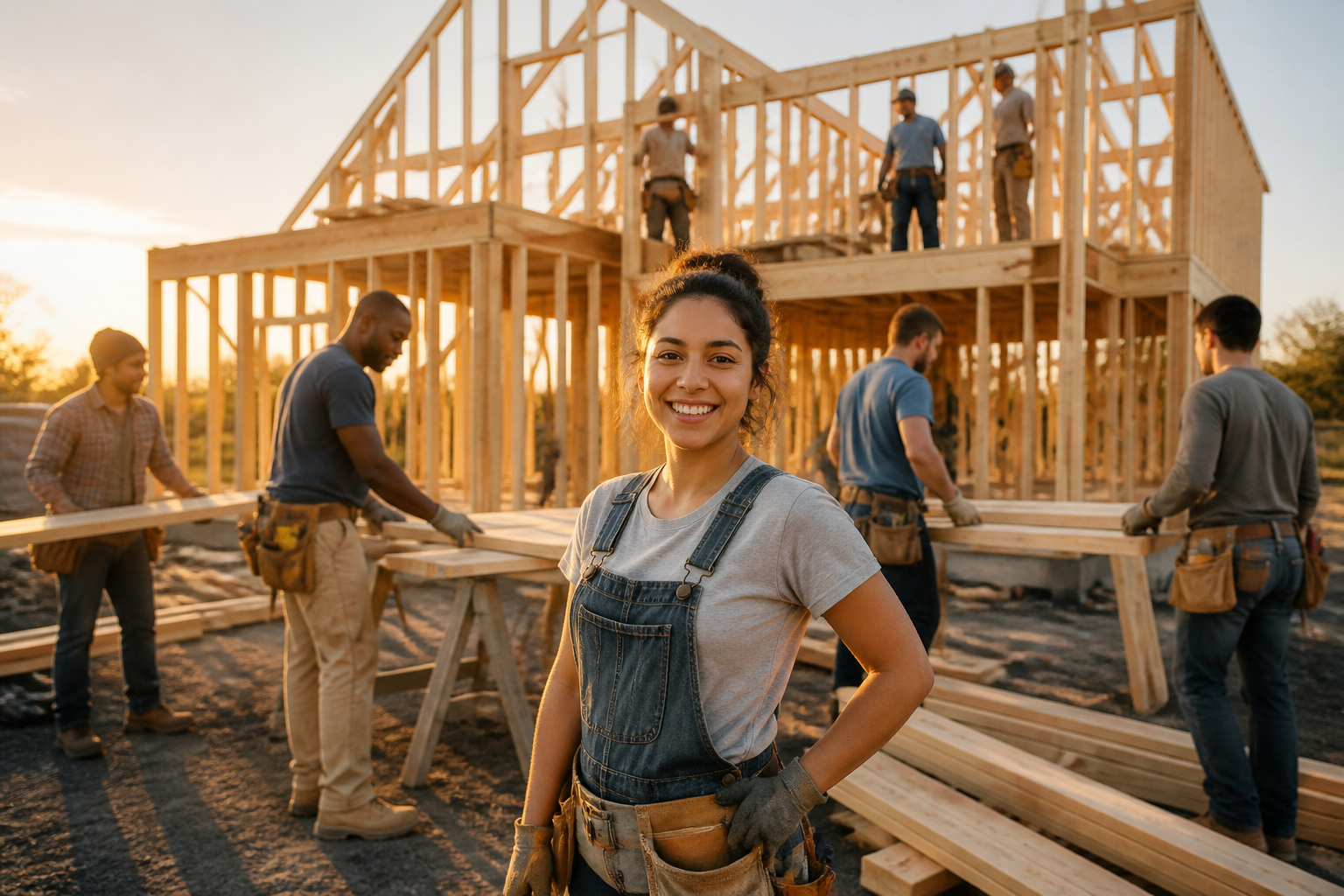
Sweat equity housing is one of the oldest and most durable answers to a problem that money alone has never solved: how do people without large savings or strong credit become homeowners? The answer is labor. Instead of a cash down payment, future residents contribute hundreds of hours of their own work — framing walls, hanging drywall, painting, landscaping — and that work is counted as equity in the home they will live in. It is a simple trade with a profound result: ownership built by the people who will actually occupy the building.
This page explains the major sweat equity housing models, how labor converts into ownership, the history that shaped them, and where cooperative ownership extends the idea further than individual homeownership ever could.
What "Sweat Equity" Actually Means
In a conventional purchase, equity is the difference between what a home is worth and what you still owe on it. You build it slowly by paying down a mortgage or by the property appreciating. Sweat equity flips the timeline. Residents earn equity before they move in by performing construction or rehabilitation work that would otherwise cost the project money in paid labor.
That contributed labor does real things at once:
- It lowers the development cost. Volunteer or resident labor reduces the contractor budget, which lowers the price the resident ultimately finances.
- It substitutes for a down payment. The value of the labor is credited toward the purchase, so families who could never assemble a five-figure cash deposit can still qualify.
- It builds skills and stake. People who frame their own walls understand their building, and neighbors who build side by side tend to stay and maintain what they made.
Sweat equity is not a loophole or a gimmick. It is a recognized financing mechanism inside federal programs, nonprofit homebuilding, and cooperative housing law. The rest of this page walks through the models where it appears.
Self-Help Housing: Building Your Own Home
The most direct form of sweat equity is self-help housing, where families build their own homes, usually in small groups, under professional supervision. No one moves into a finished house until every house in the group is finished, which is the mechanism that keeps the group working together rather than dropping out once their own roof is on.
Self-help housing in the United States grew out of mid-20th-century rural development efforts and was formalized through federal support. It targets households that earn too little to buy on the open market but are willing and able to trade labor for affordability. Participants typically contribute the majority of the construction labor on tasks that don't require licensed trades — carpentry, insulation, flooring, finishing — while electrical, plumbing, and other specialized work is handled by professionals for safety and code compliance.
The model works best when three things line up: organized supervision so untrained builders don't make costly mistakes, gap financing to cover materials and the professional trades, and a committed cohort willing to work evenings and weekends for several months.
Mutual Self-Help Housing and USDA Section 523
The federal backbone of self-help housing in rural America is the USDA Section 523 Mutual Self-Help Housing program. Under it, the USDA funds nonprofit and local government organizations to recruit groups of families, organize them, and supervise them as they build one another's homes together — "mutual" because each family works on every house in the group, not only its own.
Here is how the pieces fit:
- Section 523 grants fund the technical assistance organizations that recruit families and run construction supervision.
- Section 502 loans — direct mortgages from the USDA — typically finance the individual homes, with the value of the sweat equity reducing the loan amount or standing in for the down payment.
- The mutual structure means roughly six to ten families build together and no family occupies its home until the whole group is done.
The result is that families who contribute their labor often move in with instant equity, because the appraised value of the finished home exceeds the loan against it — the gap is the work they put in. For rural households shut out of conventional financing, Mutual Self-Help has been one of the most effective ownership pathways available, precisely because it monetizes something every applicant already has: their time and effort.
Sweat Equity Cooperatives: From "My House" to "Our Building"
Self-help housing produces individually owned homes. Sweat equity cooperatives apply the same labor-for-ownership logic to shared, multi-unit buildings — and this is where the model scales into dense, urban, and disinvested communities.
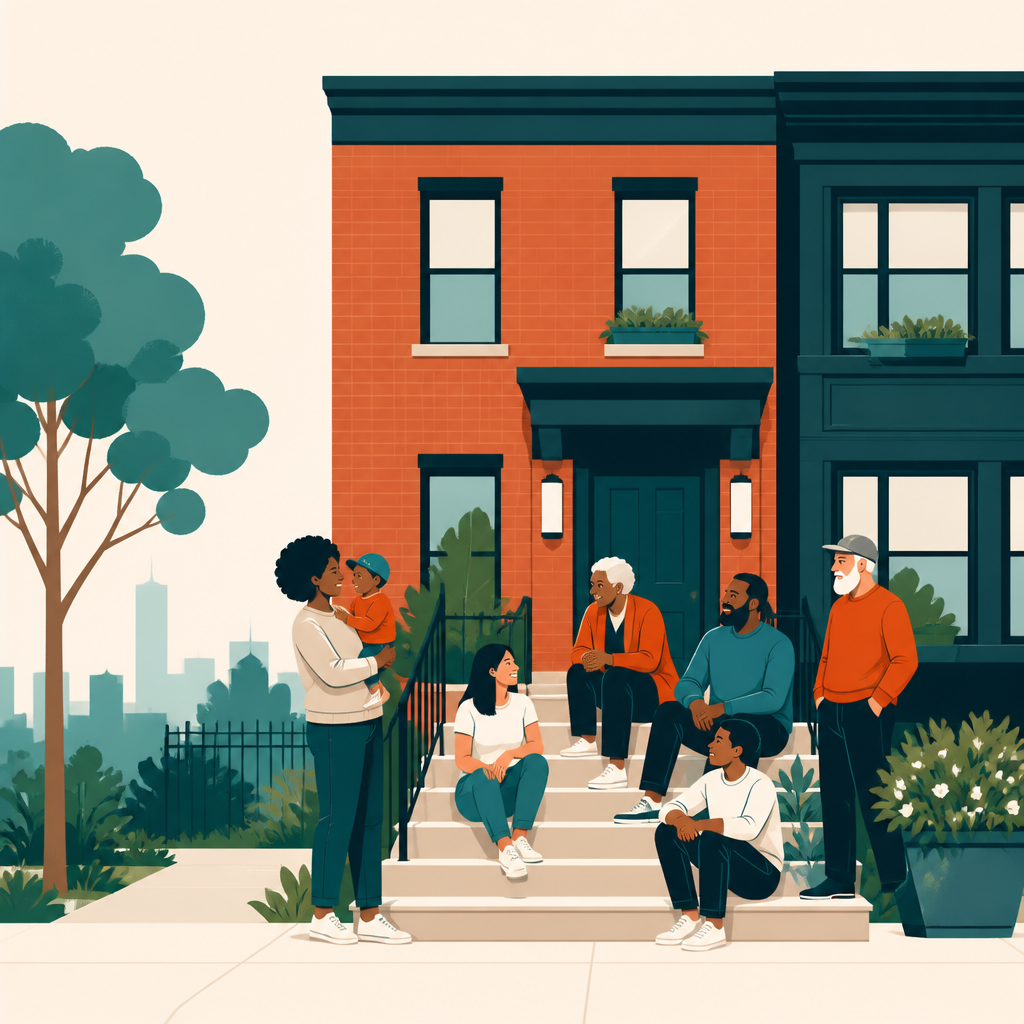
In a housing cooperative, residents don't each hold a deed to a separate house. Instead, the cooperative corporation owns the building, and each household holds a membership share that gives them the right to occupy a unit and a vote in how the building is run. When residents contribute construction or rehabilitation labor to bring that building online, that labor becomes their buy-in — their share — rather than a cash purchase price.
This matters for a few reasons:
- It fits buildings, not just lots. Apartment buildings and multi-unit rehabs can't be subdivided into individual self-build projects, but a cooperative can organize collective labor across an entire structure.
- It keeps affordability permanent. Limited-equity cooperatives cap how much a departing member can sell their share for, so the building stays affordable for the next family instead of being flipped at market rate. The sweat the first generation put in keeps paying off for the generations after them.
- It distributes control. Because the co-op is member-governed, the people who built the building also decide how it's maintained, who joins, and how reserves are spent.
Sweat equity cooperatives turn a one-time act of labor into a permanent, democratic ownership structure. The work doesn't just buy a unit — it buys a seat at the table.
Urban Homesteading: Labor in the Cities
The cooperative thread runs straight back through the history of urban homesteading. In the 1970s and 1980s, as cities held large inventories of tax-foreclosed and abandoned buildings, residents and organizers negotiated to take over derelict structures — sometimes for a nominal sum — on the condition that they rehabilitate them with their own labor.
Urban homesteading was sweat equity in its rawest form: people moved into shells without heat or working plumbing and rebuilt them room by room, often forming cooperatives to hold and manage the finished buildings collectively. Programs in cities like New York turned occupied, deteriorating buildings into resident-owned limited-equity co-ops, and many of those co-ops still stand and remain affordable decades later.
The lesson of that era is the same one self-help and mutual housing teach: where capital is scarce but labor and commitment are not, structured sweat equity can recover housing that the market has written off. The challenge has always been organization, financing, and a legal pathway — not the willingness of residents to work.
How Labor Becomes Ownership: The Mechanics
Across all these models, the conversion of labor into ownership follows a recognizable pattern:
- Labor is documented. Hours are tracked and the contributed work is assigned a value, whether as a credited down payment, a reduction in development cost, or a membership share.
- Professional work is carved out. Specialized trades and anything safety-critical stay with licensed professionals, protecting both residents and the building.
- Gap financing fills the rest. Grants, soft loans, and subsidized mortgages cover materials and the work residents can't safely do themselves.
- Ownership vests on completion. In self-help models the family takes title; in cooperatives the household receives its membership share — often with the labor value baked in as immediate equity.
- Affordability is protected. Resale restrictions or limited-equity rules keep the unit affordable for the next household, so the original sweat keeps working long after move-in.
The genius of the model is that it doesn't ask poor or modest-income families to manufacture money they don't have. It asks for time, effort, and commitment — and it builds a financing structure around those contributions.
What Changed in 2026: Co-ops in Federal Housing Programs
For decades, a structural problem held cooperative sweat equity back: many federal housing programs were written around individual ownership and rental, leaving cooperatives in an awkward gap. Organizers could build co-ops, but plugging them into the federal financing and subsidy systems that fund most affordable housing was often difficult.
That gap narrowed in 2026. The 21st Century ROAD to Housing Act (H.R.6644) was passed by Congress in June 2026 (now law as of July 2026). Within it, provisions authored by Representative Nydia Velázquez explicitly authorize cooperatives within federal housing programs — provisions aimed at a cooperative sector already home to roughly 1.5 million families.
For sweat equity in particular, that recognition is significant. When cooperatives are eligible participants in federal housing programs rather than exceptions to them, the labor-for-share model gains access to the same financing infrastructure that has long supported individual self-help homeownership. It is a clearer pathway from "a group of neighbors willing to work" to "a financed, member-owned building."
How Built By DAO + Blueprint Fit In
Built By DAO is a venture studio for community-owned development. We exist to make the path from organized residents to owned buildings shorter and more repeatable. Through Urban Array, we focus on cooperative housing in disinvested communities — exactly the places where sweat equity has historically done the most and where the new federal recognition of co-ops matters most.
Our flagship software, Blueprint, is built to plan, finance, and launch affordable housing cooperatives. The hardest part of sweat equity housing has never been the willingness to work — it's the organization, the financing math, and the legal structuring that turn that work into a real, member-owned building. Blueprint is designed to carry teams through that process: modeling project costs, mapping financing, and structuring the cooperative so contributed labor actually becomes ownership.
If you're an organizer, a community group, or a developer who wants to build housing that the people inside it own, start with Blueprint.
Plan and launch your housing cooperative with Blueprint →
Frequently Asked Questions
What is sweat equity housing?
Sweat equity housing is a model in which future residents contribute their own labor — construction or rehabilitation work — toward building or fixing the home they will own. That documented labor is credited as equity, often standing in for a cash down payment, which makes ownership reachable for households without large savings.
How does sweat equity replace a down payment?
The hours residents work are assigned a value, and that value is credited toward the purchase or membership share. Because resident labor also lowers the project's overall construction cost, families frequently move in with immediate equity — the home is worth more than the loan against it, and the difference is the work they contributed.
What is the USDA Mutual Self-Help Housing program?
It's the federal Section 523 program that funds nonprofits and local agencies to organize and supervise groups of families building one another's homes in rural areas. Section 502 loans typically finance the individual homes, and no family moves in until every home in the group is complete — the "mutual" structure that keeps the group committed.
How is a sweat equity cooperative different from self-help homeownership?
Self-help housing produces individually owned homes on separate lots. A sweat equity cooperative applies the same labor-for-ownership idea to a shared, multi-unit building: residents hold membership shares in a co-op that owns the whole structure, and their contributed labor becomes their buy-in. Limited-equity rules then keep the building permanently affordable.
Did Congress recognize cooperatives in federal housing programs?
Yes. The 21st Century ROAD to Housing Act (H.R.6644) was passed by Congress in June 2026. Provisions authored by Representative Nydia Velázquez authorize cooperatives within federal housing programs and are aimed at a cooperative sector already home to roughly 1.5 million families.
How can I start a housing cooperative?
Successful cooperatives generally need organized residents, gap financing for materials and professional trades, and sound legal structuring so contributed labor converts into ownership shares. Built By DAO's Blueprint software is designed to help teams plan, finance, and launch affordable housing cooperatives through that process — you can start at blueprint.builtbydao.com.