
The path from tenant organizing to ownership is one of the most direct ways renters can secure permanent affordability, build shared equity, and take real control of where they live. Instead of waiting for a landlord's next rent hike or a sale to an out-of-state investor, tenants organize, claim the legal right to purchase their building, and convert it into a housing cooperative they own and govern together. This guide walks through each step of that journey in plain terms, so a group of neighbors can understand what it actually takes to go from a hallway conversation to holding the deed.
This is not a theoretical exercise. Cooperative ownership has a long, documented track record in cities like New York, Washington, D.C., and across the country, and the policy ground is shifting in tenants' favor. The federal landscape matters here too: the 21st Century ROAD to Housing Act (H.R. 6644) was passed by Congress in June 2026 (now law as of July 2026), and its Velázquez provisions authorize cooperatives within federal housing programs. Cooperatives already support roughly 1.5 million families nationwide, and that base is the foundation more communities are now building on.
Why Collective Ownership Beats Renting Forever
Renting is a permanent relationship of dependence. The tenant pays, the owner decides. Rent rises, buildings are sold, and the people who have lived somewhere for decades have no say in whether they can stay. Collective ownership changes the underlying relationship.
In a housing cooperative, residents collectively own the entity that owns the building. Each household holds a membership share that gives them the right to occupy their unit and a vote in how the building is run. Decisions about maintenance, budgets, and rules are made by the members, not a distant landlord.
Most affordability-focused conversions use a limited-equity cooperative (LEC) structure. In an LEC, the resale price of a share is capped by formula, which keeps units affordable for the next family rather than letting them drift to market rate. Members still build modest equity and gain stability, but the building stays affordable in perpetuity. That trade-off, modest individual gain in exchange for permanent collective affordability, is the heart of the model.
The benefits are concrete: protection from displacement, predictable housing costs, control over conditions, and a stake in an asset most renters can never touch. The cost is real work and shared responsibility. Ownership means governing.
Step One: Build a Tenant Association
Nothing else in this process works without an organized, trusted group of neighbors. The tenant association is the vehicle for everything that follows: negotiating, qualifying for purchase rights, applying for financing, and eventually governing the co-op.
Start with one-on-one conversations
Organizing begins by talking to neighbors individually, not by calling a big meeting. Knock on doors. Find out what people are worried about, repairs, rent, the rumor that the building is for sale. Identify the natural leaders: the person everyone already goes to with a problem. Map the building floor by floor so you know who is in and who is unsure.
Hold a founding meeting and formalize
Once enough neighbors are interested, hold a founding meeting in a unit, a community room, or a nearby space. Agree on a shared purpose, elect a small steering committee, and adopt simple bylaws. Many associations eventually incorporate as a nonprofit or a legal association so they can hold a bank account, sign contracts, and act as a single party in negotiations and financing.
Document everything
From day one, keep records: a roster of members, meeting minutes, photographs of conditions, copies of letters from the landlord, and a log of repair requests. In many jurisdictions, the strength of a tenant association's legal rights depends on showing it genuinely represents the residents. Good documentation is also what banks and partners will ask for later.
A useful early goal is to recruit a clear majority of households. In cities that have opportunity-to-purchase laws, the statutes typically require that a defined percentage of tenants formally support the effort before the association can exercise its rights, so a strong, documented majority is not optional, it is the entry ticket.
Step Two: Leverage Opportunity-to-Purchase Rights
Here is the legal lever that makes tenant ownership realistic: in a growing number of places, tenants have a right of first refusal or a right to purchase when their building is offered for sale.
Understand TOPA and similar laws
The best-known example is Washington, D.C.'s Tenant Opportunity to Purchase Act (TOPA), which requires owners to notify tenants before selling and gives the tenant association the right to match a bona fide offer or negotiate to buy the building themselves. Other jurisdictions have adopted, or are actively considering, comparable Tenant Opportunity to Purchase (TOPA) and Community Opportunity to Purchase (COPA) laws. The specifics vary widely by city and state, so confirming what applies in your location is an essential early task, ideally with a tenant attorney or a local housing nonprofit.
Know your triggers and timelines
Opportunity-to-purchase laws are built around deadlines. A sale notice or an offer of sale starts a clock: tenants typically have a fixed window to register their interest, another window to submit an offer, and a further period to arrange financing. These timelines are often tight, sometimes a matter of weeks for the first steps. Missing a deadline can forfeit the right entirely.
This is exactly why the association must already exist before a sale notice arrives. Groups that start organizing only after the notice frequently run out of time. The association that has its membership documented, bylaws adopted, and a relationship with a developer and lender in place can move immediately when the clock starts.
Use your rights as leverage even if you do not buy directly
Purchase rights are powerful even when tenants do not end up buying the building outright. The right can often be assigned to a mission-driven developer who buys on the residents' behalf and commits to a cooperative conversion. The right itself, the legal ability to control or delay a sale, is what brings owners and partners to the table.
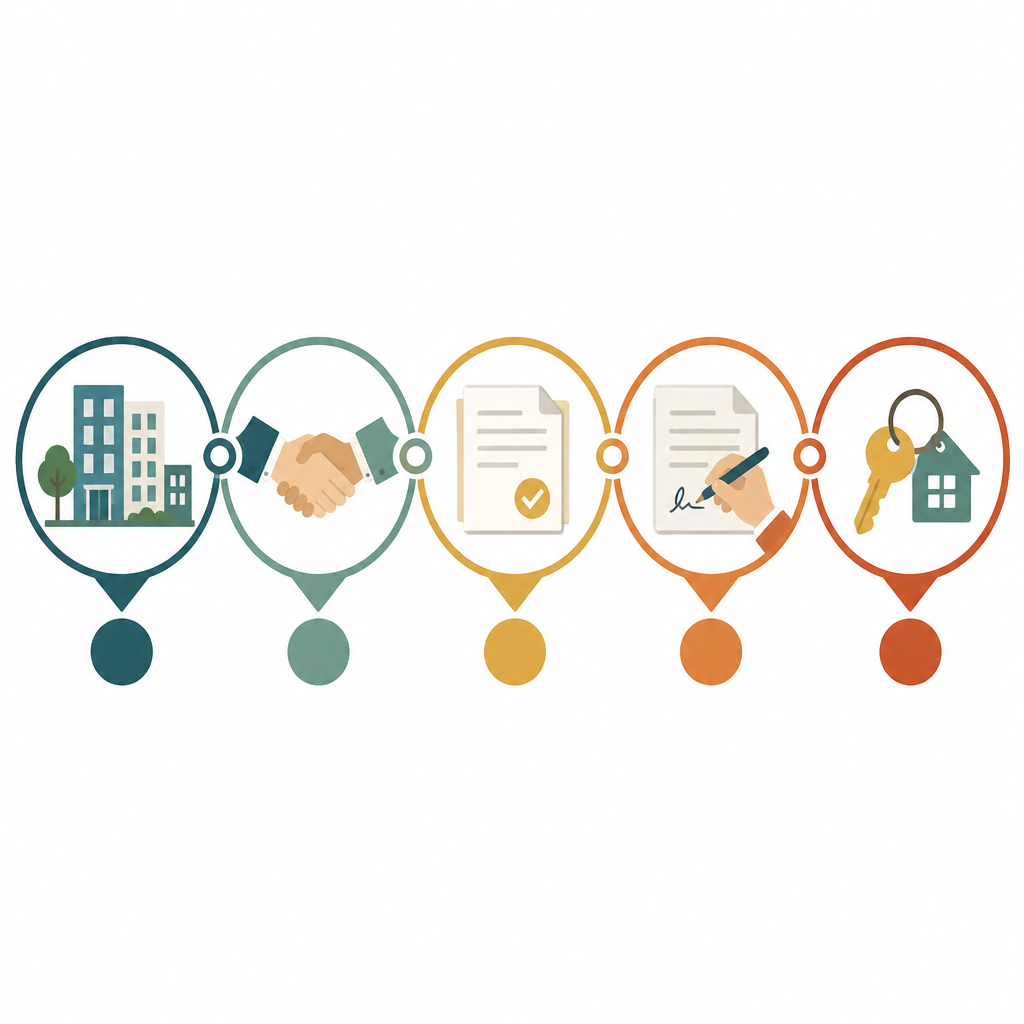
Step Three: Negotiate With the Owner
When a building is in play, the association negotiates, either to buy directly or to shape the terms of a sale to a partner. Negotiation is where preparation pays off.
Get the building's real numbers
Before talking price, gather the financial picture: current rents, operating expenses, outstanding violations, the physical condition of major systems (roof, boiler, plumbing, electrical), and any existing debt or regulatory agreements on the property. An independent inspection and an appraisal protect the association from overpaying for a building that needs a new roof next winter.
Negotiate price, terms, and time
Price matters, but so do terms. A longer closing period gives the association time to secure financing. A seller who is motivated by speed or certainty, or who wants to avoid the disruption of a contested sale, may accept a lower price or favorable terms from an organized tenant group. Some owners, particularly long-time or mission-aligned owners, are genuinely open to selling to their tenants. Approach negotiation as a problem to solve together where possible, and lean on legal rights where necessary.
Bring professionals to the table
By this stage the association should have a tenant attorney, and ideally a developer partner and a lender, advising it. Do not negotiate a purchase and sale agreement without legal review. The terms set here flow directly into financing and the eventual co-op structure.
Step Four: Partner With a Mission-Driven Developer
Very few tenant groups complete a purchase and renovation entirely on their own, and they do not need to. The standard model is to partner with a mission-driven developer or a community development organization that has done this before.
What a good partner brings
A strong development partner brings capital access, technical expertise, and a track record that lenders and public agencies trust. They help structure the deal, line up financing, manage any needed rehab, and guide the legal conversion to a cooperative. Crucially, the right partner sees residents as the eventual owners, not as customers. The goal is to transfer control to the cooperative, not to retain it.
Stacking the financing
Tenant conversions are usually financed by combining several sources: a first mortgage, public subsidy or soft loans from city or state housing agencies, Community Development Financial Institution (CDFI) lending, philanthropic capital, and sometimes federal program funds. Co-ops authorized within federal housing programs, including the cooperative provisions advanced by the Velázquez language in H.R. 6644, expand the menu of tools available. A capable partner knows how to assemble, or "stack," these sources into a workable budget.
Keep residents in the driver's seat
The relationship with a developer should be defined in writing, with clear commitments on affordability, the timeline for converting to resident control, and the structure of the eventual cooperative. A trustworthy partner welcomes that clarity. Tenants should retain decision-making authority over the things that matter most: who their neighbors are, how affordable the units stay, and how the building is governed.
Step Five: Convert to a Cooperative
The final step turns the organized group of tenants into the legal owners of their home.
Form the cooperative entity
The association forms a cooperative corporation, the legal entity that will own the building. Members adopt cooperative bylaws and an occupancy agreement (the document that replaces a lease and defines each member's rights and responsibilities). For affordability-focused conversions, the limited-equity structure is written into these governing documents, fixing the formula that caps share resale prices.
Close the purchase
With financing secured, the cooperative closes on the building. The entity takes title, and the residents become members and shareholders. This is the moment renting ends and ownership begins.
Govern together
Ownership is ongoing. The cooperative elects a board, sets a budget, hires or contracts for maintenance, and makes collective decisions. Strong co-ops invest early in member training, clear financial systems, and reserves for major repairs. The associations that thrive are the ones that treat governance as a skill to build, not a formality to check off.
How Built By DAO + Blueprint Fit In
Built By DAO is a venture studio for community-owned development. Through Urban Array, our cooperative housing initiative in disinvested communities, we work alongside residents to turn organizing into durable, resident-controlled ownership. The journey above is hard, and most of the difficulty is in the details: tight legal deadlines, complex financing, and the documentation that lenders and agencies demand.
That is what Blueprint is built for. Blueprint (blueprint.builtbydao.com) is software to plan, finance, and launch affordable housing cooperatives. It helps tenant associations model the numbers behind a purchase, organize the documentation required to exercise opportunity-to-purchase rights, structure financing across multiple sources, and move from a founding meeting to a closed cooperative without losing the thread.
If your building might be for sale, or you simply want to understand what ownership would take, the time to prepare is now, before a sale notice starts the clock.
Start planning your cooperative with Blueprint: blueprint.builtbydao.com
Frequently Asked Questions
How many tenants do we need to start a co-op conversion?
There is no universal number, but most opportunity-to-purchase laws require a defined majority of households to formally support the effort before the association can act. Practically, you want a clear, documented majority committed before a building comes up for sale, because the legal timelines move quickly once a sale notice is issued.
Do we have to buy the building ourselves?
Not necessarily. In many jurisdictions, tenants can assign their purchase rights to a mission-driven developer who buys on the residents' behalf and commits to converting the building to a cooperative. The legal right to purchase is the leverage; how the deal is structured can vary.
What is a limited-equity cooperative?
A limited-equity cooperative (LEC) caps the resale price of membership shares by a set formula. This lets members build modest equity and gain stability while keeping the units permanently affordable for future residents, rather than allowing prices to rise to market rate.
What does the 21st Century ROAD to Housing Act change?
The 21st Century ROAD to Housing Act (H.R. 6644) was passed by Congress in June 2026. Its Velázquez provisions authorize cooperatives within federal housing programs, expanding the financing and program tools available to tenant groups pursuing cooperative ownership. Cooperatives already support roughly 1.5 million families nationwide.
How long does a tenant-to-co-op conversion take?
It varies widely. Organizing a strong association can take months before any sale is in play. Once an opportunity-to-purchase clock starts, the early deadlines are often measured in weeks, while securing financing and closing can take many months more. Preparation in advance is the single biggest factor in moving quickly when it counts.
Where can we get help with the legal and financial steps?
Start with a tenant attorney and a local housing nonprofit or community development organization familiar with conversions in your area. For modeling the numbers, organizing documentation, and structuring financing, Blueprint (blueprint.builtbydao.com) is purpose-built to support tenant associations through the full process.